Why Read Novellas? Fast, Mean, and Worth It
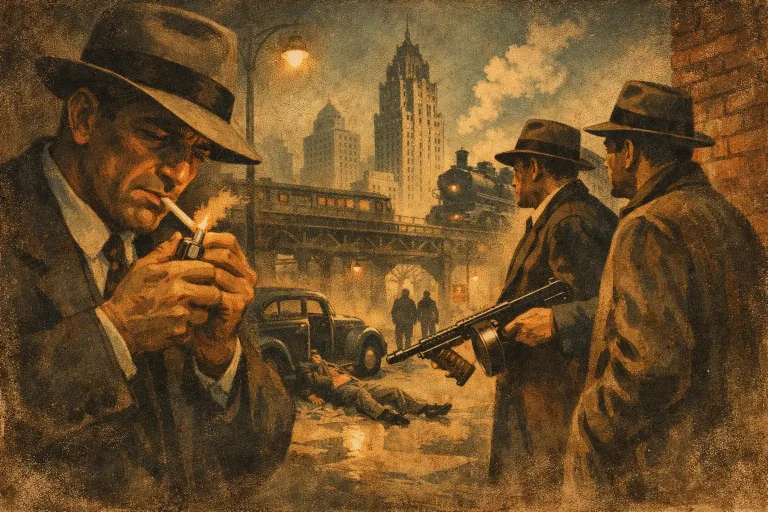
A good novella gets in the car with a bad man, tells him where the money is buried, and does not stop for coffee. That is why read novellas is not a question reserved for people with shrinking attention spans. It is a question for readers who want a complete hit of story – danger, jokes, bad decisions, consequences – without agreeing to spend three weeks carrying a 600-page hardcover through airports, doctor’s offices, and family gatherings.
The form has room for a crooked sheriff, a doomed real estate deal, a bag of cash with an unpleasant odor, or a prison yard argument that turns into something worse. What it usually does not have is a hundred pages of a detective gazing at a lake and remembering graduate school. Nothing against lakes. They just have a way of slowing down a perfectly good murder.
Why Read Novellas When You Want the Good Part?
A novella is longer than a short story and shorter than a novel, but page count is the least interesting thing about it. Its real advantage is pressure. The writer has limited room, so every scene has to earn its cigarettes. A character walks into a bar, a motel, a county office, or a funeral home with a problem. By the time they walk out, the problem has grown teeth.
That compression is especially useful in crime fiction, noir, horror, Westerns, and satire. Those genres run on momentum. A guy accepts a favor from the wrong cousin. A city councilman pockets a little money and discovers the little money belongs to people who dislike being disappointed. A woman finds out the new development behind her house is built over something nobody meant to dig up. You do not need a family tree back to 1847 to understand the trouble. You need the right details, the right voices, and a reason to turn the next page.
Novellas can give you that clean forward shove. They often begin closer to the fuse and finish before the blast radius turns into paperwork.
The story has less room to lie around
Big novels can be wonderful. They can also be upholstered. There is a particular kind of book that introduces seventeen people, three side businesses, two childhood traumas, and a dog with symbolic eyes before anybody gets punched. Sometimes that is the meal you want. Sometimes you want a sandwich with a switchblade in it.
A novella tends to cut the furniture. It has one central job: follow this mess until it breaks. The plot may have twists, but the story is usually not wandering around looking for its shoes. That makes the form ideal for readers who love sharp dialogue and characters who reveal themselves under pressure. Let two desperate people argue over a body in the trunk and you can learn more than you would from fifty pages of tasteful backstory.
This does not mean novellas are simple. A compact book can hold a dirty little universe. It can show a failed marriage, a corrupt town, a crime racket, a religious scam, or a whole political circus in a small number of pages. The trick is choosing the pressure point. One bad afternoon can tell you plenty about a country club, a police department, or the human soul.
A Novella Respects the Time You Actually Have
Most readers do not lack interest. They lack uninterrupted hours. There are jobs, kids, aging parents, flights, errands, insomnia, and that television show everyone claims gets good in season three. A novella offers a complete experience inside the cracks of a real week.
You can finish one over a few lunch breaks, during a long evening, or on a flight where the person in 14B has claimed both armrests and is eating tuna from a plastic container. Better yet, you can remember the whole thing when you are done. The characters, the final turn, the terrible choice at the center of it – they stay together in your head because you did not spend a month drifting in and out of the book.
For Kindle readers, the format is almost suspiciously convenient. Start at 11 p.m. Tell yourself you will read two chapters. Look up at 1 a.m. having made a series of bad choices, but at least the fictional ones were worse.
There is no shame in wanting a book that fits your life. Reading does not become more virtuous because it requires a wrist brace. The point is to be taken somewhere. A lean book can take you to a meaner, stranger place before bedtime.
Short does not mean slight
Some readers still treat a shorter book like a small steak at an expensive restaurant. They assume the missing pages must contain the real value. But length and impact are different animals.
A novella can hit harder because it refuses to dilute its strongest material. It can end with a door opening, a gun clicking empty, a laugh at exactly the wrong moment, or a revelation that changes every page before it. The book does not need to explain the weather after that. It knows when to leave the room.
There is also a particular pleasure in rereading novellas. A sprawling novel asks for commitment. A novella asks, “Want to see how this racket goes bad again?” That makes it easy to revisit a favorite voice, setting, or character without rearranging your calendar. You can return to the scene of the crime and notice the warning signs you missed the first time.
Novellas Let Genre Writers Get Weird
The novella is a fine place for dangerous ideas that might get sanded down in a longer book. A novelist with 400 pages to fill may feel obliged to add subplots, broaden the cast, and explain how the zoning board works. A novella can start with the zoning board taking bribes from a man who may not be entirely human, then keep moving.
That freedom matters for pulp-minded fiction. A premise can be big, nasty, funny, and a little ridiculous without being forced to wear a tie. Biological weapons in a beach town. An assassin with a customer-service problem. A developer selling luxury homes near a disaster nobody has officially admitted happened. The form lets a writer commit to the bit, follow it to the worst possible place, and get out before the joke spoils.
It also gives readers a lower-risk way to try something new. Curious about a Western but allergic to cattle-drive logistics? Try a novella. Want horror with your crime story, or political satire with a body count? A compact book lets you sample a new flavor without signing a lease.
Of course, that depends on what you want. If you are after a huge cast, a century of family secrets, or a map with twelve kingdoms, a novel may be the better machine. Novellas are built for velocity, concentration, and aftermath. They are not trying to replace every kind of reading. They are trying to make one kind of reading exceptionally hard to put down.
The Best Ones Leave a Mark
The strongest novellas do not feel abbreviated. They feel sharpened. You do not finish them thinking, “That could have used another 300 pages.” You finish them thinking about the one character who should have walked away, the one lie that poisoned everything, or the one piece of advice nobody listened to because it came from a drunk in a parking lot.
That lingering effect comes from restraint. When a writer cannot explain every motive, the reader does some of the work. When a setting is sketched with a few precise details – mildew, diesel, cheap cologne, a courthouse elevator that smells like burnt wires – it becomes more alive than a page of brochure copy. When dialogue is allowed to carry the load, people sound like people: defensive, funny, scared, full of crap.
A novella trusts the reader to keep up. It does not hand over a binder. It hands over a match.
So pick one that sounds like trouble. Read it on a night when you have an hour to spare and no urgent need to be sensible. If the book does its job, you will close it with the uneasy satisfaction of someone who watched a stranger make one terrible decision after another and is already wondering what happens if they do it again.