Noir Versus Hardboiled and Why the Difference Matters
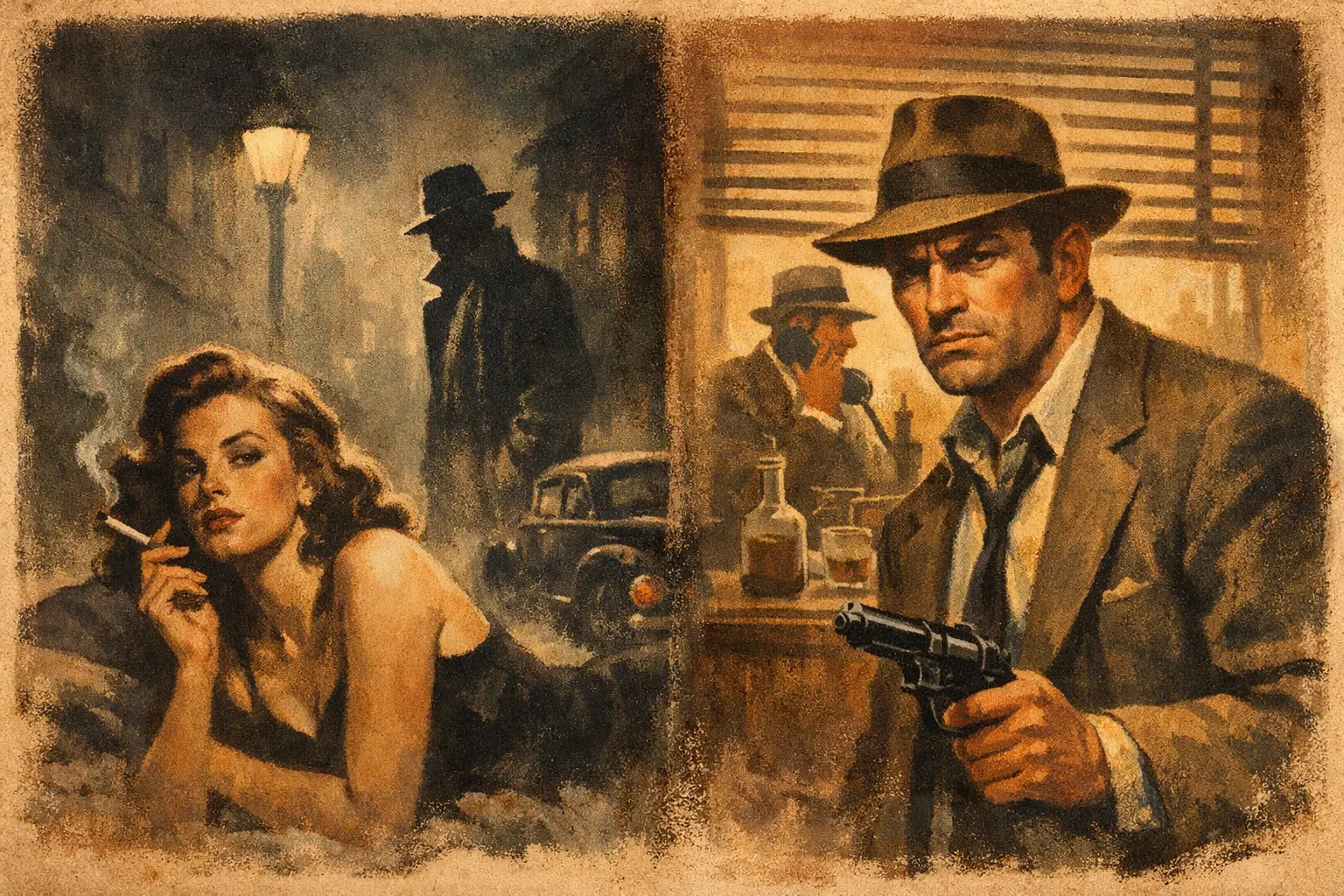
A guy walks into a bar with a gun in his coat, a lie in his mouth, and a bad feeling about the woman at the end of the counter. Is that noir versus hardboiled? Maybe. But the real answer depends on what happens next. If he keeps fighting, cracking wise, and trying to shove the world back into line, you are probably in hardboiled country. If the bar, the woman, the gun, and the guy’s own rotten choices were all waiting to drag him into the river, that is noir.
The labels get used like interchangeable cigarette brands, especially when somebody wants to sell a crime novel with a shadowy cover. They are related. They share cops, crooks, dames, double-crosses, cheap rooms, blood on the carpet, and the general understanding that respectable institutions are often run by the worst people in town. Still, noir and hardboiled do different jobs. Knowing which is which makes it easier to find the kind of trouble you actually want to read.
Noir versus hardboiled: the short version
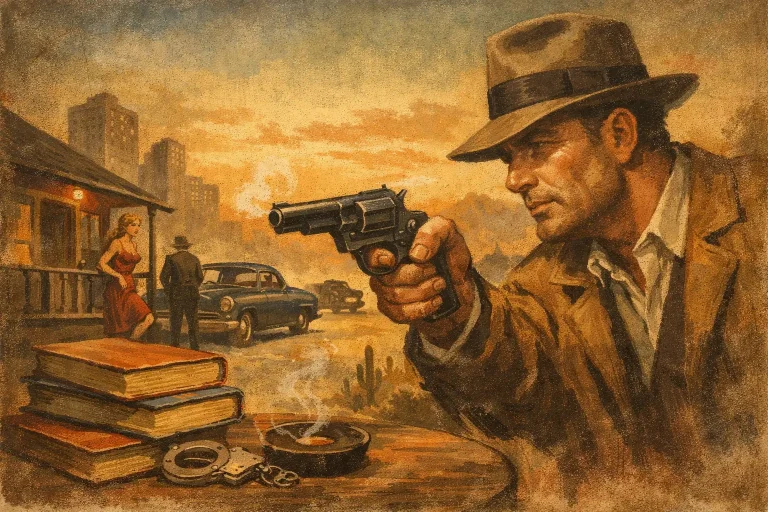
Hardboiled fiction is built around confrontation. Its central character, often but not always a detective, moves through a crooked system and pushes back. He may be broke, bruised, drunk, divorced, or one poor decision from getting shot behind a dry cleaner, but he has a code. The code may be dented. It may be ugly. It may get somebody killed. It is still there.
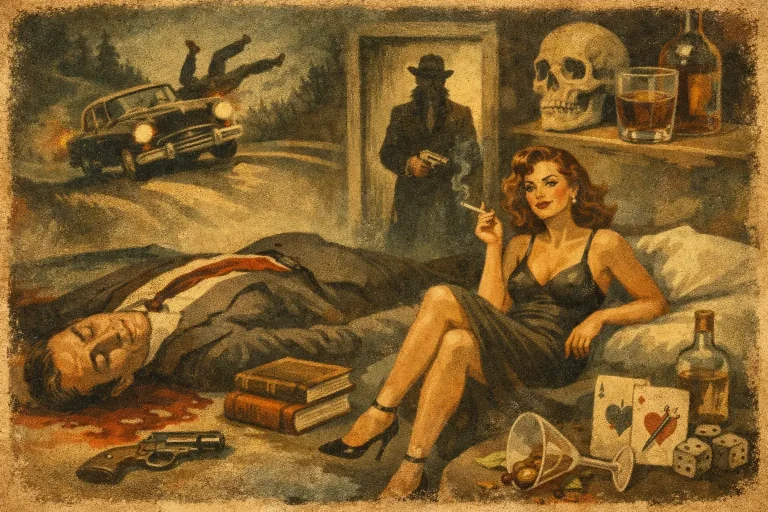
Noir is built around entrapment. The central character is not necessarily a detective and is often a civilian, small-time criminal, clerk, drifter, salesman, veteran, gambler, or fool who thought one dirty deal would fix everything. Noir does not require a moral code because it is more interested in the moment a person sells it for cash, sex, revenge, status, or a chance to stop feeling powerless.
Put another way: hardboiled asks, “How far will this bastard go to get at the truth?” Noir asks, “How badly will this bastard ruin his life before he understands the truth?”
That distinction is not a law handed down from the Crime Writers’ Mountaintop. Plenty of great books run both engines at once. But it is a useful way to spot the difference in the dark.
Hardboiled means somebody is willing to fight
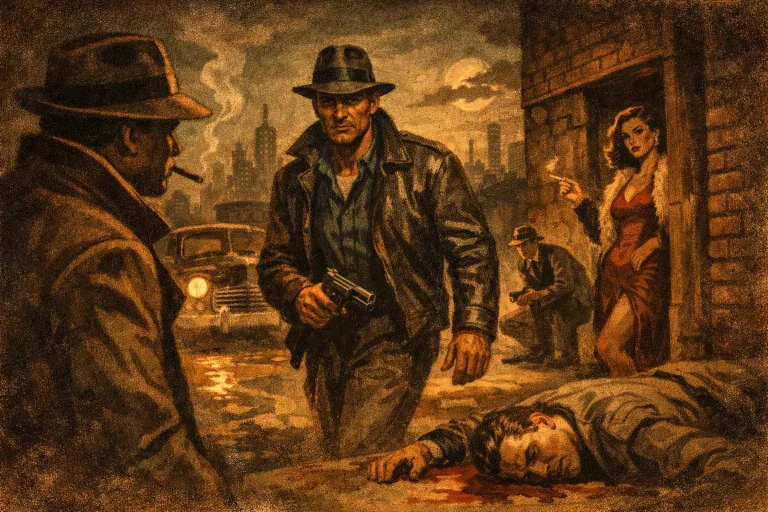
The hardboiled hero lives in a corrupt environment, but corruption has not completely hollowed him out. Think of the private eye who knows the police captain is on a payoff, the rich family is hiding a corpse, and the client is lying through expensive teeth. He keeps digging anyway, partly because he was hired and partly because walking away would leave a bad taste in his mouth.
That does not make him a saint. Hardboiled protagonists can be violent, prejudiced, petty, and spectacularly bad at relationships. They may toss a thug down a staircase and then spend three pages complaining about the price of bourbon. The point is that they act. They investigate. They provoke. They take a beating and come back with a better question.
Dashiell Hammett helped give the form its iron jaw. Raymond Chandler made the voice smoother, sadder, and more poetic. Ross Macdonald found family rot under the manicured lawn. Elmore Leonard stripped away the ornament and let criminals talk themselves into deeper holes. Their books differ, but hardboiled fiction generally has forward motion driven by a character trying to expose, solve, recover, protect, or settle something.
The ending may be grim. The detective may lose the girl, the money, the case, and half his blood volume. Yet hardboiled fiction often preserves one stubborn little victory: a secret gets uncovered, a killer gets named, or the hero refuses to become exactly like the people he is hunting.
Noir means the trap is already set
Noir is less interested in a man with a code than a man with a weakness. He does not enter the story ready to clean up the city. He enters because he needs money, wants somebody else’s wife, owes the wrong person, hates his boss, or thinks he is smarter than the lunkheads who got caught last time.
Then the trap tightens.
In classic noir, fate is not magic. It is pressure. A bad economy, a bad neighborhood, a predatory employer, racial exclusion, war damage, addiction, class resentment, sexual obsession, or plain old greed can turn a minor compromise into a body in the trunk. The character has choices, sure. The trouble is that every choice looks like a door marked EXIT, and most of them lead to the basement.
James M. Cain understood this better than almost anybody. In stories such as The Postman Always Rings Twice and Double Indemnity, desire does not arrive wearing a black cape and announcing its intentions. It arrives looking practical. A little money. A new life. One ugly husband out of the picture. Sounds manageable, right up until the insurance investigator starts asking questions and everybody discovers that murder has paperwork.
That is noir’s special talent: making doom feel both inevitable and entirely self-inflicted. The reader watches the protagonist take the first stupid step, then the second one, then the step that requires a shovel and an alibi. It is suspense with a hangover.
The hero is not the only difference
The two modes also see the world differently. Hardboiled fiction may be cynical, but it usually believes the truth exists. It might be buried under bribes, phony testimony, political favors, and a couple of fresh graves. Somebody can still dig it up.
Noir is less confident. Truth may exist, but it does not necessarily save anyone. A man can learn exactly who set him up five minutes before the train hits him. A woman can understand the whole scam after she has already signed the papers, cashed the check, and poisoned the wrong person.
Style matters, too. Hardboiled prose tends to be tough, direct, and observant. The voice scans a room for exits, weapons, lies, and the sort of shoes that cost more than a month’s rent. Noir can use the same clipped language, but its atmosphere is more feverish. Desire curdles. Rooms get smaller. Even a sunny afternoon can feel like a bad place to make a decision.
Neither category requires fedoras, Venetian blinds, black-and-white movies, or a detective named something like Brick Malone. Modern noir can live in a biotech startup, a suburban homeowners association, a county jail, a political campaign, a Florida condo development, or a real estate scam with a motivational speaker at the center. Hardboiled stories can feature women investigators, reporters, bounty hunters, ex-cons, lawyers, or anybody stubborn enough to keep poking at trouble after sensible people have gone home.
When crime stories cross the line
The best crime fiction often borrows from both sides. A detective novel may start hardboiled, with a working investigator chasing facts, then turn noir when the case exposes the investigator’s own weakness. A noir story may give its doomed protagonist a hardboiled streak at the end, letting them make one defiant choice even when it cannot save them.
That crossover is where the fun lives. Real people are rarely pure heroes or pure victims. They are often both in the same week. The cop takes a bribe to cover medical bills. The crooked developer tells himself the deal will create jobs. The killer has one line he will not cross, until somebody gives him a reason. Crime fiction gets interesting when a character’s excuse meets the bill for it.
For readers, the choice comes down to appetite. Want sharp dialogue, a stubborn investigator, and a crooked world that can still be punched in the mouth? Pick hardboiled. Want lust, greed, bad timing, and a lead character sliding down a greasy staircase toward catastrophe? Pick noir. Want both? Find the book where the hero opens the wrong door, hears the lock click behind him, and decides to start asking questions anyway.
That is the good stuff. Not the clean case, not the noble speech, not the tidy little bow. Give us a compromised soul, a dangerous scheme, and one last chance to do the right thing after it has become terribly inconvenient.