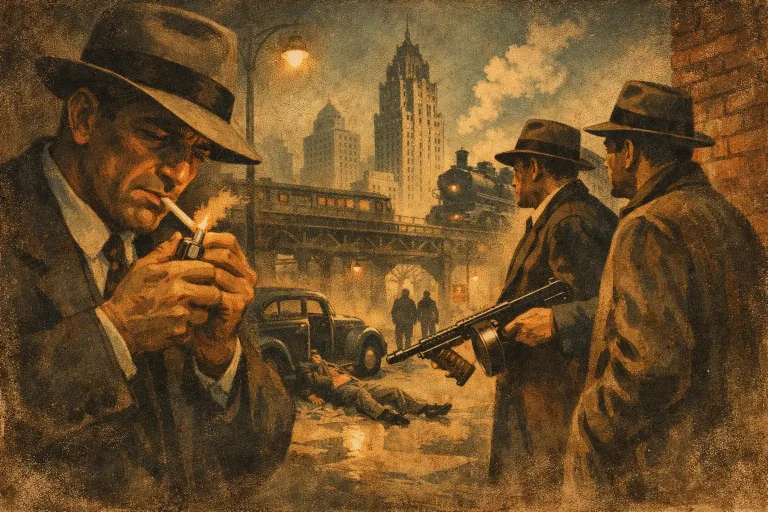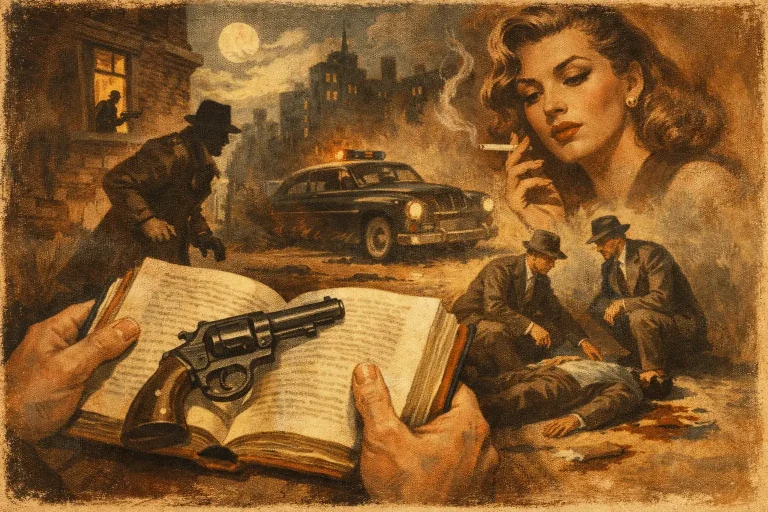
Why Bank Robbery Fiction Never Gets Out Clean
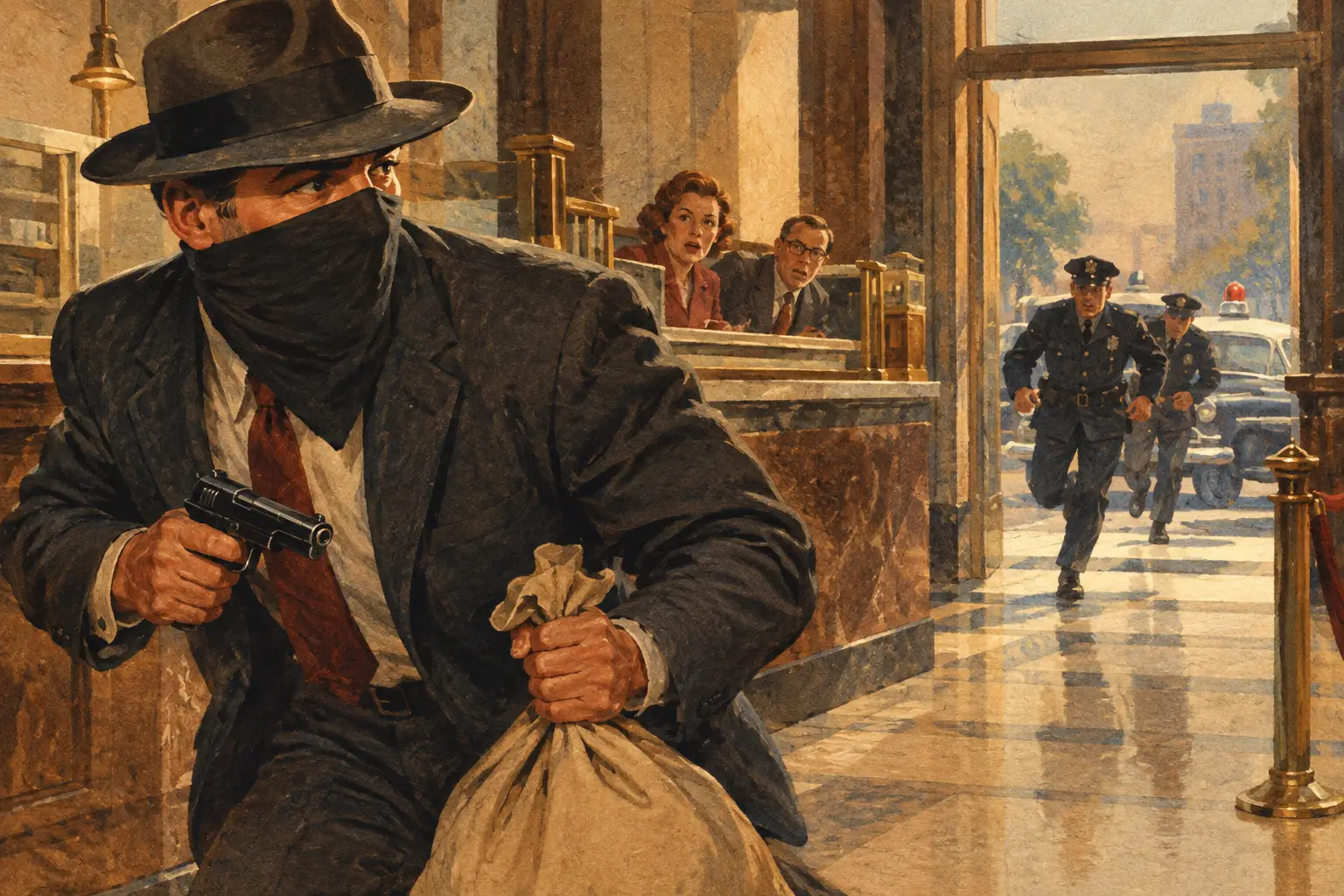
A bank robbery is supposed to be the clean part. You walk in, make the threat, take the money, and disappear before anyone finds the courage to hit a silent alarm. That fantasy lasts about three pages in good bank robbery fiction. Then somebody brings the wrong gun, parks the wrong car, recognizes a teller from high school, or learns the bag is full of marked bills and retirement dreams.
The money is never the whole story. Money is the lit match. The story is what burns when desperate people decide a bad plan is better than no plan at all.
Bank Robbery Fiction Starts After the Plan Goes Bad
A robbery plot has a built-in engine: time is short, risk is high, and nobody involved is telling the full truth. That is why the setup has survived every change in crime fiction, from dusty outlaw tales to fluorescent-light capers involving surveillance cameras, burner phones, and a getaway driver whose probation officer keeps calling.
But a bank is not just a building full of cash. It is a small, air-conditioned theater of authority. There are cameras in the ceiling, procedures taped to the wall, polite employees trained to survive a nightmare, and customers who arrived to deposit a check and leave with a story they will tell for forty years. A robber walking through those doors is not only stealing money. He is declaring war on routine.
The best stories understand that the robbery itself may be the easy scene. The hard part comes afterward. A crew has to divide the money. A wounded partner needs medical help. A girlfriend discovers the source of a sudden stack of cash. A local cop notices a detail that does not fit. Somebody starts talking because fear has a way of turning a tough guy into a chatty little bastard.
That is where the fun lives: in consequences, frayed loyalties, and the long ugly drive out of town.
The Robber Should Want More Than Money
Readers do not need to approve of a criminal. They do need to understand why this particular fool thinks a bank is his answer. Maybe he owes a dangerous man. Maybe the factory closed, the medical bills piled up, and every honest door has been nailed shut. Maybe he is a career thief who loves the work and hates admitting it. Or maybe he wants to prove he is still somebody after a lifetime of being ignored.
Those motives can overlap. Real desperation rarely arrives with one clean label. A man can be broke, vain, angry, and stupid before breakfast.
The trick is not to turn him into a saint wearing a ski mask. Crime fiction gets syrupy when it treats criminals as noble rebels automatically striking back at The System. Sometimes The System deserves a kick in the teeth. It also has tellers with kids, security guards with bad knees, and witnesses who will carry the panic home with them. A robbery has victims even when the bank is insured.
That moral pressure gives the story weight without requiring a sermon. Let the character explain himself. Let him make a persuasive case. Then let his choices keep making the case worse.
Every Crew Is a Loaded Gun
A lone robber can make for a tense, stripped-down story. One person, one weapon, one increasingly hopeless escape route. But put three or four criminals in a car and you get the real machinery of noir: competing agendas.
One partner wants to keep the score small and quiet. Another believes fear is efficiency. The driver has an old warrant. The inside contact wants a larger cut than promised. The guy who claimed he had done this before has, in fact, robbed a liquor store in 1998 and spent the last twenty years polishing the anecdote.
Nobody should agree too easily. Agreement is for people ordering pizza. A robbery crew is held together by need, ego, and the belief that betrayal will happen to somebody else.
That tension also makes dialogue matter. Crime readers can smell exposition dressed up as conversation. They want threats disguised as jokes, jokes that land like threats, and a sentence that tells you exactly who has nerve and who is about to break. The toughest man in the room does not always shout. Sometimes he asks for the keys twice.
The Setting Has to Push Back
Bank robbery fiction gets stale when it takes place in Generic City, USA, where every street is damp, every detective drinks black coffee, and every criminal owns the same leather jacket. Put the scheme somewhere with a pulse.
A dying mill town has different pressures than a booming Sun Belt suburb. In a ranch country bank, everybody may know everybody, which makes a mask less useful than a good alibi. In a coastal Florida strip mall, the getaway can get tangled in tourists, condo fraud, hurricane traffic, and an alligator somebody should have left out of the plan. In a city neighborhood being chewed up by redevelopment, the bank may be the last local institution that has not been converted into luxury apartments with a dog wash station.
Place changes behavior. It changes who can hide, who gets recognized, what law enforcement can control, and which local power broker quietly owns half the town. A crooked sheriff, a casino fixer, a real estate operator, or a county commissioner with a private security company can turn a simple heist into a bigger and dirtier machine.
That is the beauty of the premise. A bank job gives a writer a door into whatever is rotten nearby.
Violence Works Better When It Costs Something
A bank robbery carries violence in its pocket from the moment a weapon appears. The weapon may be unloaded. It may be fake. It may never leave the robber’s coat. Nobody in that room knows that, and fear does its own damage.
A story can be funny, savage, and fast without treating violence like confetti. The gun going off should alter the temperature. It should complicate the escape, split the crew, wake up the police department, or leave one character unable to sleep without hearing the sound again. Even a hardened criminal can discover that he liked planning violence better than witnessing it.
This does not mean every story needs a lesson stapled to its forehead. It means cause and effect should be awake. If someone gets hurt, the plot should limp afterward. If someone dies, the survivors should carry the smell of it into the next scene.
Dark humor belongs here because people say ridiculous things under pressure. A robber might demand everyone lie down, only to discover an elderly customer cannot get down without assistance. A getaway car might have a child seat in the back because its owner borrowed it from his sister. The joke should not erase danger. It should make the danger feel more human, more awkward, and somehow worse.
The Ending Should Refuse the Easy Exit
A clean getaway can work, but it needs a price. Maybe the thief escapes the law and loses the one person he thought he was saving. Maybe the crew gets rich but cannot spend a dollar without exposing itself. Maybe the money itself is a problem: stolen twice, traceable, or owned by people who do not file insurance claims.
More often, the best ending does not ask whether the robbers get caught. It asks what they have become by the time the answer arrives. The character who began as the cautious planner may be the last one willing to pull a trigger. The loudmouth may show unexpected loyalty. The apparent victim may turn out to be the only person who understood the whole scheme.
That reversal has to grow from character, not fall through the ceiling wearing a plot-device mustache. Surprise is cheap. Inevitable surprise is the good stuff.
Why the Bank Still Matters
Cash is less visible now. Payments blink across phones, wages land electronically, and plenty of banks look more like expensive lobbies than places where sacks of money wait behind a grill. That does not kill the bank robbery story. It makes it mean something different.
A modern robber may be chasing access codes, cryptocurrency keys, safe-deposit leverage, blackmail material, or a manager forced to approve a transfer. Yet there is still a primitive charge in the old version: a person walking into a place built on trust and deciding trust is for suckers.
That is why the premise keeps coming back. A bank robbery is greed with a face. It is panic in a public room. It is a shortcut taken by people who have run out of patience, options, or common sense. Dress for success, kill for money, and try not to let your cousin pick the getaway route.
If you are writing one, do not spend all your ammunition on the mask, the gun, and the vault. Put the real charge in the people who believe they can control what happens next. The bank is only where they make the first mistake.