Why Independent Crime Authors Hit Harder
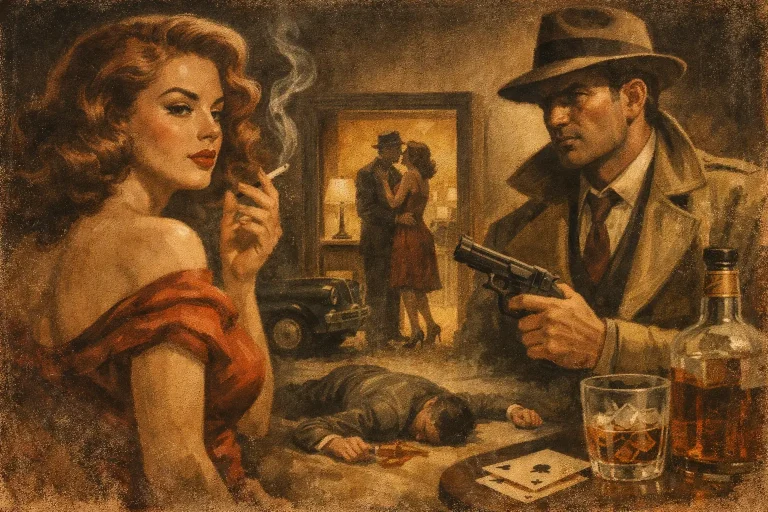
A guy with a gun is only the beginning. The fun starts when the guy also has an expired real estate license, a cousin in county lockup, a girlfriend who knows too much, and a plan that would embarrass a drunk raccoon. That is where independent crime authors tend to earn their keep: in the nasty, funny, badly lit corners the big publishing machine may decide are too regional, too mean, too strange, or too entertaining.
Crime fiction has always had room for polished professionals, but it was built on troublemakers. The best stories do not need a heroic detective with perfect hair and a franchise-ready trauma arc. Sometimes they need a debt collector in Tulsa, a crooked councilman in South Florida, a prison cook with a side business, or an aging hit man who has chosen the worst possible week to grow a conscience.
Independent Crime Authors Can Take the Side Street
Traditional publishing has its reasons for playing careful. A large house is managing budgets, sales teams, bookstore placement, foreign rights, and enough meetings to bury a small town. That can produce terrific books. It can also produce a preference for familiar packages: the reliable serial killer, the respectable detective, the thriller with a clean label attached.
Independent crime authors can make a different kind of mess. They can write a novella about a botched ransom in a dying casino town. They can put biological panic beside local zoning corruption. They can let a Western turn into a horror story halfway through, because the corpse in the mine was never going to stay quiet. Nobody has to ask whether the concept fits neatly on a sales spreadsheet.
That freedom matters because crime is not neat. It leaks into bad marriages, family businesses, churches, hospitals, zoning boards, dive bars, strip malls, funeral homes, and whatever institution has convinced itself it is too respectable to be crooked. A writer working outside the gate can follow that leak wherever it goes.
The trade-off is real. Independence does not automatically mean good. A book without an editorial safety net can wander into the weeds, repeat itself, or mistake cruelty for edge. Readers have to use their judgment. But when an independent writer has control and discipline, the result can feel less manufactured. The story takes its own ugly route home.
The Voice Is Usually the Real Contraband
Plot gets readers through the door. Voice makes them stay after the police arrive.
The crime writers people remember know how characters talk when they want money, mercy, sex, revenge, or a ride out of town. Elmore Leonard understood that a threat lands harder when the speaker sounds bored. George V. Higgins knew half the battle was letting criminals explain themselves into deeper trouble. Carl Hiaasen could turn civic rot into a comedy with teeth.
Independent writers often have more room to protect that voice. They do not have to sand down every regional phrase until every crook sounds like he attended the same expensive workshop. A character can be petty, funny, ill-informed, and specific. He can call a handgun a heater, a lawyer a parasite, and a terrible plan “temporary” right until somebody loses an ear.
That does not mean loading every page with wisecracks. The joke has to belong in the room. Gallows humor works because people use it when the alternative is admitting they are terrified. In a good crime story, laughter is not decoration. It is a survival tool, a tell, or a little puff of smoke before the building burns down.
Small Places Make Big Criminal Stages
The most convincing crime fiction understands geography. Not postcard geography. Working geography.
A reader should know why the character takes the frontage road instead of the interstate, why a development deal stinks, why the sheriff owes favors, and why nobody calls the cops after midnight. The story does not need a travel brochure. It needs the feel of a place where money moves through recognizable hands and everybody knows which restaurant has a back room.
Independent crime authors are especially good at this because they are often writing from the places they know, or the places they have watched with a careful eye. Their settings can be gloriously unfashionable: a sun-blasted Texas subdivision, a rusting Ohio river town, a Southern California office park, a desert motel with a drained swimming pool and two kinds of trouble waiting by the ice machine.
Regional realism also keeps the violence honest. A murder is not just a stylish body on a rug. It creates paperwork, fear, gossip, opportunists, and one relative who suddenly remembers an old unpaid debt. The more grounded the world, the more every bad decision has weight.
Freedom Works Best With a Sharp Knife
Readers looking for independent crime fiction should not lower their standards. Cheap does not mean lean, and fast does not mean rushed. The best books in this lane still need a clean premise, characters with motives stronger than the author’s convenience, and an ending that feels earned even when it comes with blood on the wallpaper.
A few signs are worth watching for. The opening should create pressure early. Dialogue should reveal who has power and who is pretending. Violence should change the situation rather than merely decorate it. And the story should know what kind of animal it is. Noir can be bleak. Pulp can be outrageous. Satire can be vicious. But confusion is not a genre.
Length is another advantage when it is used well. Independent authors can publish a lean novel, a short-story collection, or a nasty little piece of flash fiction without pretending every idea needs 500 pages and a map. A prison break may need a full novel. A guy disposing of the wrong body may only need twenty pages and a good shovel.
That flexibility suits actual reading lives. Sometimes you want to spend a weekend in a sprawling conspiracy. Sometimes you want a sharp story before bed that leaves you checking the locks and laughing despite yourself.
Crime Fiction Does Not Need Permission to Be Weird
The strangest thing about crime is how ordinary it can look from the outside. A nice suit. A charity luncheon. A software startup. A public-health contract. A ribbon-cutting ceremony for condos built on land nobody was supposed to own. Independent writers can push into those ugly little absurdities without needing to reassure anybody that the book fits one shelf.
That is where crime fiction gets lively again. A cartel story can collide with body horror. A political satire can become a murder mystery. A Western can feature a town so corrupt that the outlaws begin to look like the responsible citizens. The point is not to mash genres together for the sake of being clever. The point is to follow the story where the rot leads.
Randy Cade Books lives in that territory: criminals, killers, schemes, institutions with dirty hands, and humor that shows up wearing the wrong shoes. The aim is not to make crime glamorous. It is to make it entertaining, human, and a little more ridiculous than anyone wants to admit.
Read the Ones Taking Chances
The next time you want a crime novel, look past the safest cover in the stack. Find the writer who has a crooked local angle, a dangerous sense of humor, and enough nerve to let the plan go wrong in public. You may get a rough edge or two. You may also find the book that reminds you why crime fiction was never supposed to behave itself.