7 Examples of Desperate Criminal Schemes
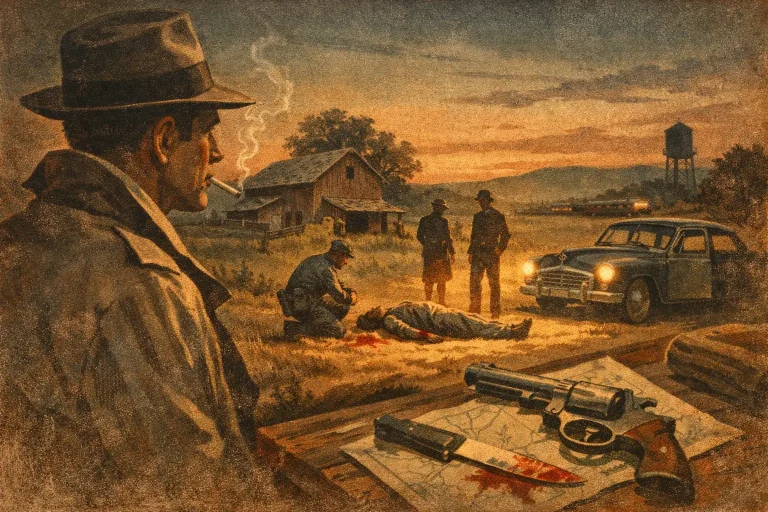
A good crime story does not begin with a genius holding all the cards. It begins with somebody staring at a bill, a body, a deadline, or a guy named Vinny who says he needs his money by Friday. The best examples of desperate criminal schemes run on pressure. The crook does not want a life of crime. He wants one clean escape from the mess already chewing on his leg.
That is where the fun starts. A desperate plan is not elegant because it cannot afford to be. It is held together with borrowed cash, bad information, wounded pride, and one partner who claims he has done this before. He has. That is why he is missing two fingers and owes money to a dentist in Reno.
What Makes a Criminal Scheme Desperate?
Desperation is not the same thing as greed. Greed wants more. Desperation wants out. A greedy operator may spend six months arranging a polished scam, complete with shell companies, a lawyer in a blue suit, and a logo that looks expensive. The desperate criminal has until sunrise, a trunk that will not close, and no workable answer to the question, “What happened to the security guard?”
For crime fiction, that distinction matters. A desperate scheme carries its own fuse. Every character has a reason to lie, leave, panic, or make a deal with the one person who should never be brought into the room. The plot does not need to push hard. It is already rolling downhill in a shopping cart with one bad wheel.
The following examples of desperate criminal schemes are useful because they put character ahead of mechanics. None requires a criminal mastermind. They require people with bad options, weak nerves, and an alarming talent for mistaking a temporary fix for a future.
1. The Stolen Money That Cannot Be Spent
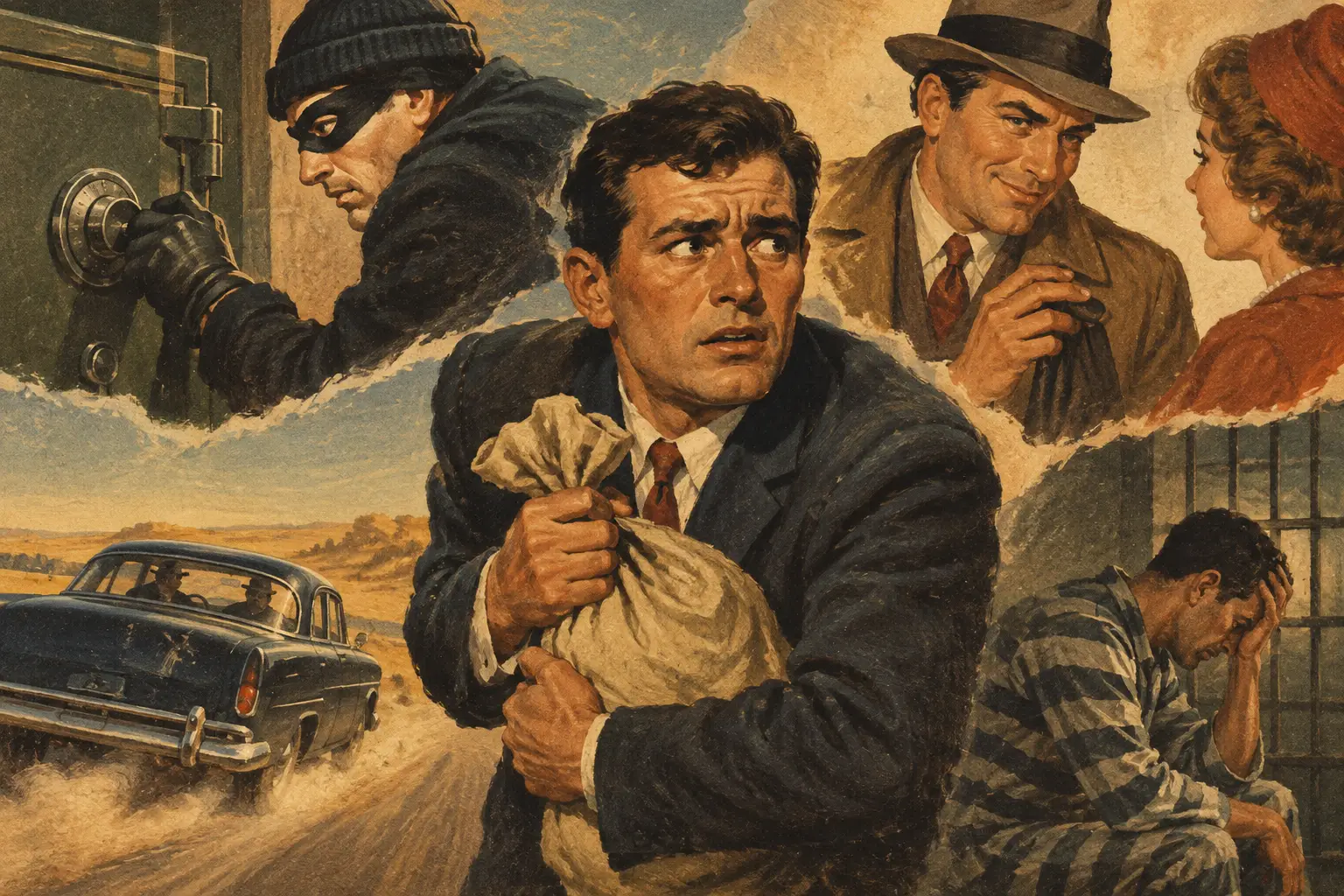
A low-level thief grabs a bag from the wrong car. Maybe he thinks it holds cash from a poker game. Instead, it belongs to a connected businessman, a crooked campaign fixer, or a cartel accountant who keeps records because he does not trust anybody, including himself.
The money is now radioactive. Spending it attracts attention. Returning it requires a conversation nobody survives comfortably. Keeping it means the thief must outrun people with better cars, more patience, and a casual attitude toward kneecaps.
The beauty of this setup is that the money becomes less valuable with every page. What looked like a jackpot turns into a rolling indictment. Give the thief a sick kid, a parole officer, or an ex-wife who recognizes one of the marked bills, and the scheme gets meaner fast.
2. The Fake Kidnapping That Becomes a Real One
This one has the clean, ugly snap of classic noir. A couple fakes a kidnapping to collect ransom from a rich parent, an estranged spouse, or an insurance policy with more fine print than mercy. The plan depends on a few things going right: the victim stays cooperative, the family pays quickly, and nobody involved decides this is a fine moment to settle old scores.
Naturally, somebody does.
Maybe the supposed victim sees a chance to disappear for real. Maybe a third party grabs them, assuming the ransom is genuine. Maybe the family refuses to pay because they know exactly how rotten their loved one can be. A fake crime becomes a real crime, and the people who started it have to explain their way out without admitting the original fraud.
It works because everybody is guilty, but not necessarily guilty of the same thing. That gives dialogue room to sweat, squirm, and accidentally reveal the one fact that gets somebody killed.
3. The Last Job Before Prison
The phrase “one last job” should make any sensible person lock the doors and move to another state. In fiction, it is gasoline.
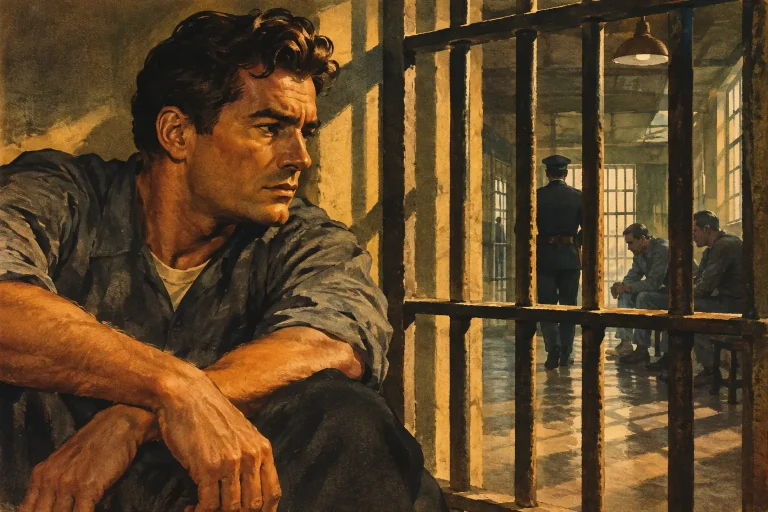
A man learns he is headed back to prison. Maybe he violated parole. Maybe an old witness surfaced. Maybe the judge remembers him and has the warmth of a cobra in a freezer. He decides he needs one score to set up his family before he goes away. His logic is terrible, but it has emotional weight. He is not chasing luxury. He is trying to leave something behind besides apologies.
The twist is simple: prison has already shaped every relationship in his life. His old crew sees him as a liability. His kid does not want his money. His wife has made peace with his absence. The job is not really about cash. It is about a man trying to prove he still has a place in a world that moved on without him.
That can turn violent, funny, or both. Often both is better.
4. The Real Estate Deal With a Body in the Basement
Real estate is crime fiction with better brochures. The desperate version begins when a developer, landlord, or struggling homeowner needs a sale to close before the bank takes everything. The property has one problem: somebody died there. Or somebody is still there, in the legal, biological, or deeply inconvenient sense.
Maybe a fixer is hired to make the problem disappear before an inspection. Maybe the corpse is old, the paperwork is newer, and a city official has already signed off on something he should not have seen. Now the sale involves a realtor who will not stop smiling, a buyer with a suspiciously low offer, and a neighbor who photographs every car on the block.
This scheme earns its keep when the building itself has history. Bad houses collect secrets the way bars collect broken promises. A condemned motel, a half-finished luxury tower, or a desert subdivision with no water can do more for a story than a warehouse full of gold.
5. The Botched Murder-for-Hire Deposit
A man pays a killer to solve a personal problem. The killer takes the deposit, then discovers the target is protected, politically useful, accidentally related to somebody dangerous, or already dead in a way that complicates billing.
Now the client wants his money back. The hired gun wants the rest of it. The target may be alive after all and understandably irritated. Everybody starts making calls they cannot unsay.
The desperate part is not the murder contract. It is the financial argument afterward. Crime gets darkly comic when ruthless people must negotiate like divorced homeowners arguing over patio furniture. One party insists the work was attempted. Another says attempted is not the same as completed. A third party points out that the client never disclosed the target had three bodyguards and a pet wolf.
This kind of scheme works best when nobody is cool. Cool criminals are furniture. Let them be petty, scared, territorial, and furious about being shorted.
6. The Blackmail File Nobody Can Verify
A desperate blackmailer gets hold of recordings, documents, photographs, or medical data that could ruin a public figure. The problem is that the evidence may be real, altered, incomplete, or planted by somebody with a larger appetite.
The blackmailer cannot go to the police. The target cannot admit what is in the file. A political consultant, corporate attorney, or local sheriff enters the picture, each promising to make it all go away. That phrase has put more fictional bodies in rivers than moonlight ever did.
This is especially useful for satire because powerful people tend to respond to blackmail with committees, consultants, and private security. Their panic arrives wearing a lanyard. The scheme becomes desperate when the blackmailer realizes the scandal is only one layer of a much uglier operation.
7. The Miracle Product With One Night Left to Sell It
The desperate grift does not need a gun at first. Sometimes it begins with a miracle supplement, a medical device, a survival gadget, or a miracle investment pitched from a motel conference room beside the ice machine.
The product does not work. Worse, it may hurt people. The operators know the regulators are coming, the investors are asking questions, and the warehouse is full of inventory that has to disappear before dawn. They stage a launch event anyway, complete with fake testimonials, rented crowds, and a spokesman too dim to notice he is being set up as the fall guy.
This is where horror can creep in through the side door. A scam built on false hope becomes monstrous when the consequences are physical. It also lets the story mock the language of success, where every liar calls himself a founder until the handcuffs arrive.
Let the Bad Plan Reveal the Person
The scheme is only the trap. The character is the animal that walks into it.
When writing or reading this stuff, ask what the criminal believes will be fixed if the plan works. Debt? Shame? A dead marriage? The need to be seen as somebody who matters? That answer gives the chaos a pulse. It also explains why a person keeps going after any reasonable adult would dump the evidence in a lake and take a bus west.
Randy Cade Books lives in that territory: the crooked deal, the wrong partner, the joke that lands a second before the gunshot. Give your criminals a terrible plan, then give them one honest reason they cannot let it go. The rest of the trouble will find them.