Chicago Mobster Crime Fiction Still Has Teeth
A guy is found in the trunk of a Buick behind a Polish deli. The alderman says he never met him. A developer says the building permit was clean. A bartender says nothing, because the bartender enjoys breathing. That is Chicago mobster crime fiction when it is working: not a museum display full of pinstripes and violin cases, but a city where the money has changed hands so often nobody remembers who first dirtied it.
The old Outfit legends are useful furniture. They give a writer names, neighborhoods, muscle, ghosts, and a nice loaded gun on the mantle. But the good stuff begins after the tourist version runs out. Chicago is built for crime stories because power has always worn several hats here. It is the guy holding the zoning map, the guy collecting a union favor, the guy running a funeral home, and the guy telling everybody he is just trying to feed his family. Sounds wholesome right up until somebody gets fed to Lake Michigan.
Chicago Mobster Crime Fiction Is Not a Costume Party
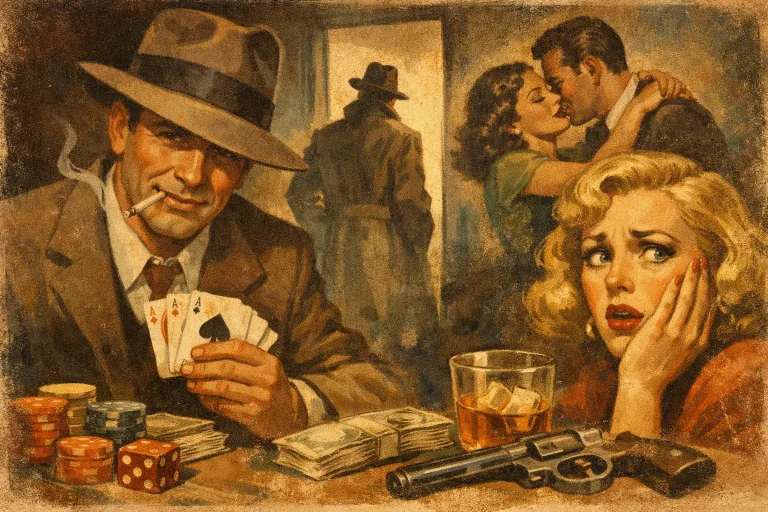
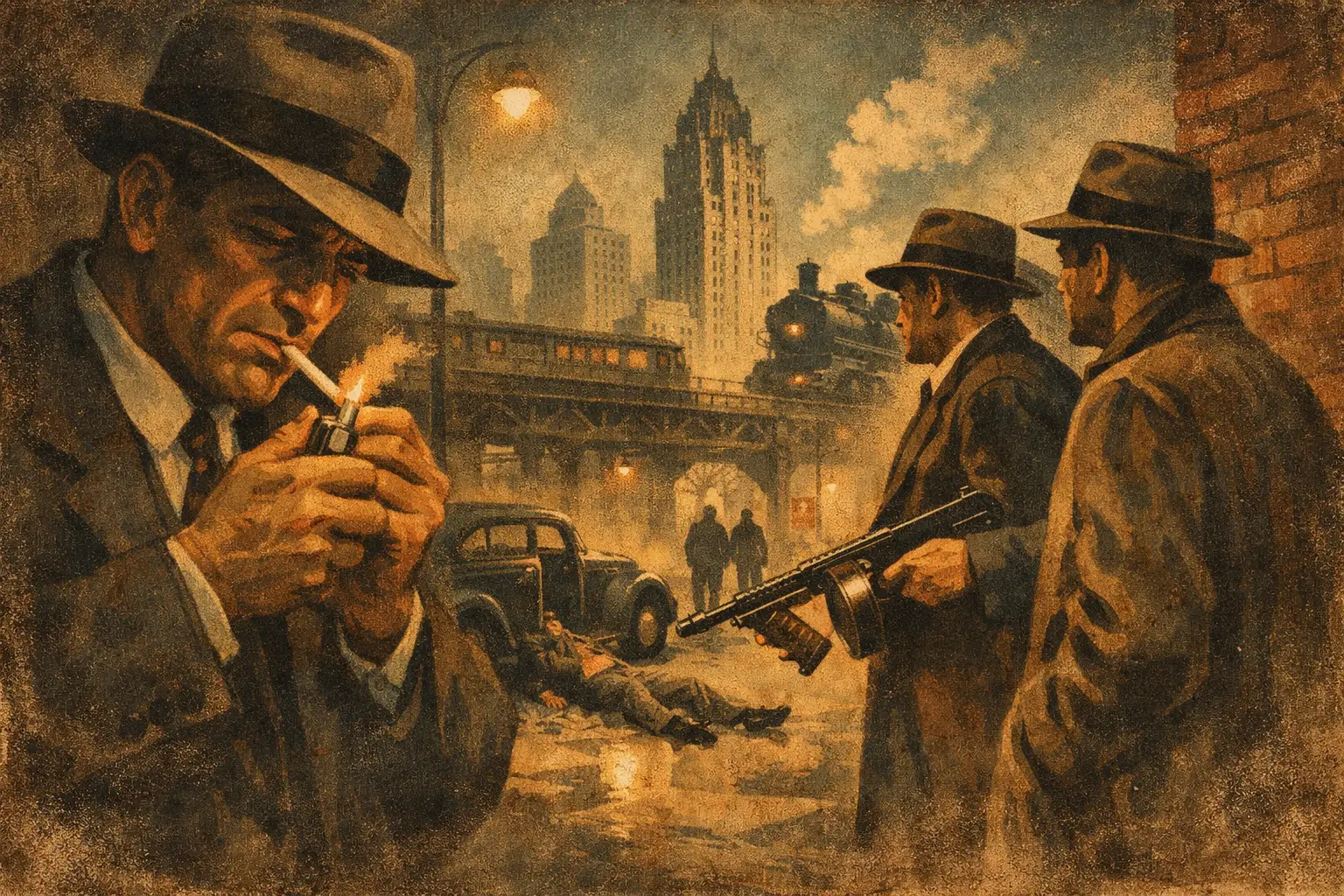
The cheap version of the Chicago mob story comes with a fedora, a Tommy gun, and a man saying “see” like he learned English from a cartoon. Fine. Those props can be fun. So can a good bloodstained tuxedo. But they are not the city, and they are not the engine of a lasting crime novel.
The better version understands that organized crime is rarely organized in the clean, military way movies like to pretend. It is personal. It is a cousin who needs a job. A cop who wants a favor repaid. A businessman who swears he is respectable while his books look like they were assembled during an earthquake. The crew may have rules, but every rule gets flexible when a divorce, a gambling debt, an ambitious nephew, or a load of missing cash walks through the door.
That mess is where the laughs live too. A mobster can order a beating and still spend forty minutes complaining about a restaurant reservation. A killer can be ice-cold until a parking ticket sends him into orbit. Chicago crime fiction earns its dark comedy by letting criminals be vain, petty, cheap, hungry, frightened, and sometimes spectacularly stupid. Evil does not need a cape. Often it has a bad back and three unpaid credit cards.
The City Does Half the Dirty Work
Chicago is not one setting. It is a stack of settings arguing over who gets the last word. The Loop has polished lobbies where a crooked deal can pass for a business lunch. Bridgeport has memory. The Gold Coast has money that wants to look innocent. The industrial edges have empty lots, truck routes, warehouses, and the kind of quiet that makes a sensible person keep driving.
Then there is the weather. Winter is not background decoration. It is an accomplice. Snow covers evidence, traps people indoors, turns a simple tail into a dangerous mess, and gives every bad decision a deadline. Summer does the opposite. Windows open. Tempers rise. Everybody is outside, watching, talking, lying. A body in an alley is one thing in January. In July, it becomes neighborhood entertainment before the sirens arrive.
A writer does not need to name every street corner to make Chicago feel real. In fact, too much local trivia can make a novel read like a hostage note from a tourism bureau. What matters is pressure. The city should make the characters behave differently. Traffic delays the escape. An old neighborhood connection ruins an alibi. A campaign fundraiser puts enemies at the same table. The elevated train rattles past at exactly the wrong moment, swallowing the sound of a gunshot or a confession.
Corruption Works Better When It Has Paperwork
Chicago mob stories get interesting when the crime is not merely robbery or murder. Those are fine occupations for a Tuesday. But the city has a special talent for making dirt look official.
A real estate scheme can bury people without firing a shot. A fake nonprofit can move money with a smile and a catered luncheon. A public contract can create enough enemies to fill a cemetery. Put a mobster, a developer, a ward boss, and a disgraced investigator in the same room, then add a zoning variance worth millions. Nobody needs to be a criminal mastermind. They just need to believe they are the smartest person at the table.
This is why the old mob framework still has legs. The rackets evolve. The appetite does not. Bootlegging becomes construction fraud. Gambling becomes online scams. Protection becomes consulting. The guy in the back room may now carry a phone instead of a revolver, but he is still trying to turn somebody else’s fear into rent money.
What Makes a Mob Story Feel Alive
A good Chicago crime novel does not worship its gangsters. It lets them be dangerous without making them glamorous. There is a difference between writing a charismatic criminal and handing him a parade float.
The most convincing mob characters usually have something painfully ordinary at stake. They want a son out of prison. They want a wife to stop asking questions. They want to keep their father from learning what they did with the family business. They want to move somewhere warm, but first they have to survive one more job. That human pressure does not excuse the violence. It makes it land harder.
Dialogue matters more than a glossary of mob slang. People under pressure do not deliver polished speeches about honor. They interrupt, hedge, threaten sideways, change the subject, and remember an insult from twelve years ago with courtroom precision. A man who says, “I thought we were friends,” can mean anything from disappointment to a shallow grave. Let the reader hear the difference.
It also helps to remember that the cops are not automatically saints, the politicians are not automatically devils, and the criminals are not automatically clever. Everybody has an angle. The detective may be honest but exhausted. The councilman may be crooked but terrified of the people funding him. The young enforcer may be competent right until he falls in love, panics, or decides he deserves a bigger cut. Moral complication is not about making everyone equal. It is about making every choice expensive.
The Trap of Nostalgia
There is a temptation to treat Chicago’s criminal past like a souvenir shop. Al Capone gets reduced to a hat, a cigar, and a nickname. Prohibition becomes a party with better music. The actual damage gets swept behind the velvet rope.
Crime fiction can use history without kneeling before it. The past should leave stains. A family fortune built on old rackets can poison a present-day inheritance fight. A retired fixer can find that nobody wants his old code anymore. A neighborhood that remembers the old bosses may discover the new predators have cleaner shirts and better lawyers.
That is the trade-off with historical flavor. Use too little and the story could happen anywhere. Use too much and the novel becomes trapped in amber, staring lovingly at its own suspenders. The strongest Chicago mobster crime fiction borrows the weight of history, then lets modern greed make fresh trouble.
Why the Best Stories Keep the Joke Loaded
Dark humor is not a break from the violence. It is part of the violence. The joke tells you what people have to ignore to get through the day. A wisecrack at a funeral, a lousy sandwich during a stakeout, a hitman with an irrational fear of dogs – these moments do not make crime cute. They make the characters recognizable before the floor drops out from under them.
That is the sweet spot for readers who like their noir with teeth. The plot should move. The dialogue should snap. The city should feel like it can smell weakness through a locked door. And when the bodies start accumulating, the story should know that somebody still has to explain the bloodstain to the landlord.
Chicago does not need another bedtime story about noble gangsters and glamorous sin. It needs crooked schemes with consequences, bad people with believable excuses, and survivors who know better than to call themselves innocent. Give the city a secret, give somebody a reason to sell it, and make sure the person holding the gun has a problem bigger than the gun.