Why Western Thrillers Still Hit You So Hard
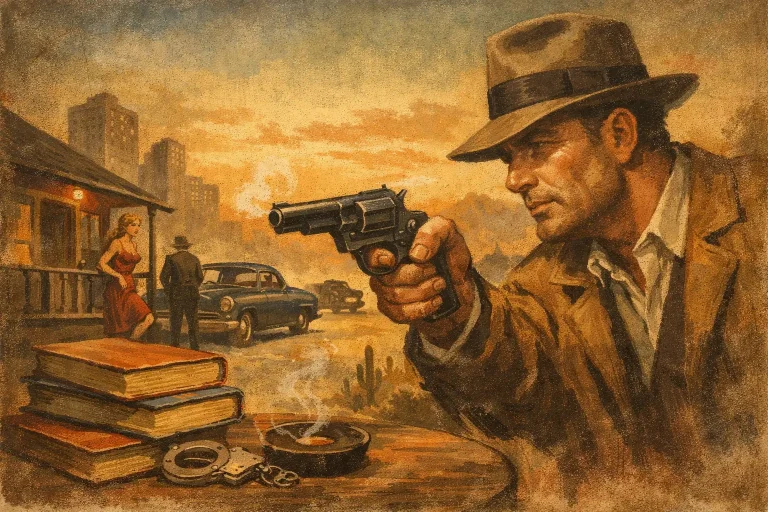
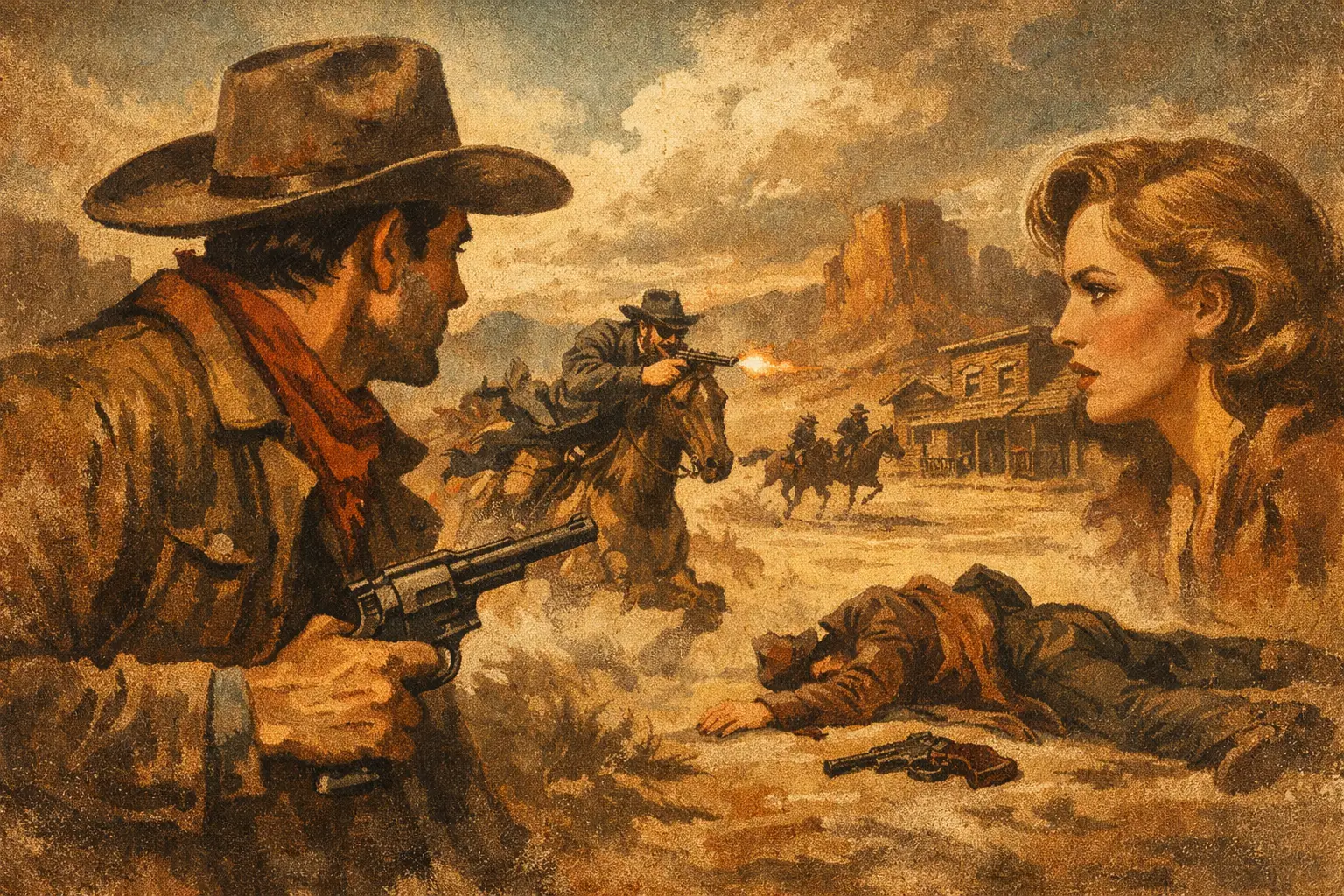
A man walks into a town with a bad leg, an empty canteen, and a gun he swore he would never carry again. By sundown, somebody has stolen his horse, somebody else is dead, and the sheriff is lying through his teeth. That is the machinery that makes Western thrillers run. The setting may have dirt streets and six-shooters, or pickup trucks and a dying cattle town, but the pressure is the same: there is nowhere to hide, and everybody knows what you did.
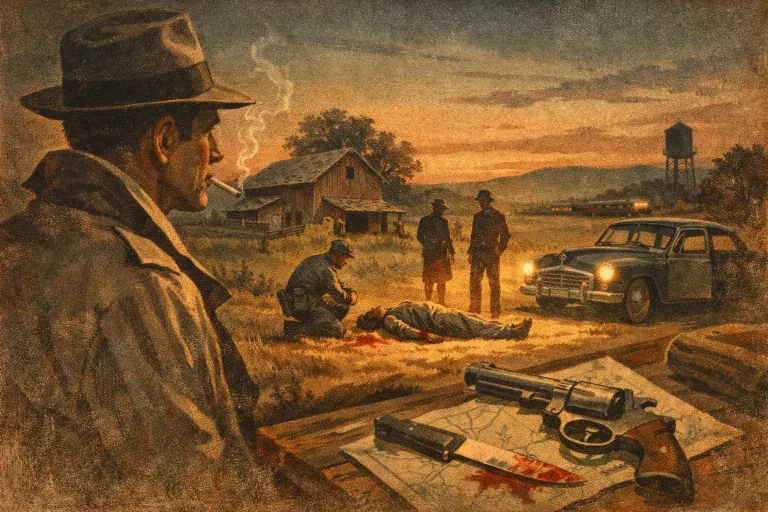
The best ones do not treat the West like a postcard full of sunsets, spurs, and noble men squinting at the horizon. They treat it like a crime scene with more acreage. A frontier town is a pressure cooker. Put one murderer, one land grabber, one crooked lawman, and one person dumb enough to believe a handshake means something inside it. Sounds like a party, doesn’t it?
Western Thrillers Are Not Costume Drama
A straight Western can be about survival, honor, revenge, cattle, war, or the passing of an old way of life. A thriller needs a fuse. It wants a secret, a clock, a body in the wrong place, or a deal that turns poisonous before breakfast. The central question is not merely whether the hero can survive the country. It is whether he can figure out who is trying to bury him before the grave gets filled.
That distinction matters because it keeps the genre moving. A horse ride across twenty miles of empty desert can be beautiful. It can also be a long time to think about the fellow who shot your brother, burned your house, and now has your daughter tied up in a line shack. The landscape slows the body down while the plot tightens the screws.
The old frontier gives a thriller clean stakes. Communication is unreliable. Medical help is far away. The nearest judge may be drunk, bought, or already floating facedown in a stock tank. If a man makes a bad decision, he cannot erase it with a quick phone call and an insurance claim. He has to ride toward the consequences.
The Land Is an Accomplice
In city crime fiction, danger often comes from proximity. Too many people, too many eyes, too many back rooms where somebody is waiting with a tire iron. In the West, danger comes from distance. There may be no witness for fifty miles. There may be one witness, which is worse, because he is the rancher who owns the water and has three sons who enjoy setting things on fire.
A good Western thriller uses geography like a loaded weapon. A dry riverbed can become an ambush route. A narrow pass can trap a posse. A broken bridge can turn an arrest into a siege. Even the weather has an attitude. Heat cooks patience. Cold makes small injuries fatal. Rain turns roads to glue and washes away the evidence, usually right before somebody needs it.
This is why regional detail beats fancy description. You do not need five paragraphs about the glory of a sunset. Give the reader the smell of creosote after rain, a fly-blown carcass by the fence, and a gas station with one working pump and a cashier who has seen too much. That is country with a pulse.
Distance Changes Every Bad Decision
A thriller lives on decisions made under pressure. The Western gives those decisions room to get ugly. If the protagonist leaves a wounded partner behind, it is not a short walk back. If he takes the wrong road, he may wind up on private land owned by the people hunting him. If he shoots the wrong man, he cannot disappear into a crowd. The town is the crowd, and half of it is related to the corpse.
That creates a particular kind of dread. Modern crime stories can use surveillance cameras, burner phones, and data trails. Western thrillers strip that stuff down to tracks in dust, shell casings, rumors at a saloon, and whether a horse comes back sweating. The clues are physical. So are the consequences.
Nobody Gets to Stay Clean
The weak version of the Western divides the cast into white hats and black hats, then acts surprised when the ending is easy. The better version understands that decency is expensive. A ranch wife may hide a killer because he saved her son. A deputy may take bribes because his county has no tax base and his mother needs medicine. A gunman may be a monster, but he may also be the only person telling the truth about who owns the town.
This does not mean every character needs a tragic monologue and a childhood trauma scrapbook. Sometimes a bastard is just a bastard. But he should be a bastard with a method. He wants the mine, the railroad contract, the grazing rights, the water, the widow’s land, or control of a border route. Greed has always been more believable than pure evil, and usually more organized.
Humor belongs here too. Not sitcom humor. Gallows humor. The kind that escapes when two men are digging a grave in hard ground and one says the dead guy picked a terrible place to become a problem. Violence lands harder when the characters have not been posing for a bronze statue all afternoon.
What Separates a Western Thriller From a Western
The difference is not the number of guns, hats, or horses. It is momentum. A Western thriller has a question that keeps getting worse. Who robbed the stagecoach becomes why was the money marked? Why was it marked becomes why is a federal agent pretending to be a preacher? By the time the truth shows up, the original crime should look almost quaint.
The protagonist also needs a problem bigger than a grudge. Revenge is useful fuel, but revenge alone can get repetitive. Give the character competing obligations. Maybe he wants to kill the man who ruined him, but that man is holding evidence that could clear an innocent prisoner. Maybe she wants to sell the family ranch and run, but the buyer has been poisoning the town well. Now the choice has teeth.
A good plot also resists the temptation to make its lead invincible. The hard case who never loses a fight, never misreads a person, and always has one more bullet is not hard. He is furniture. Let him get tricked. Let him run out of water. Let him realize that the quiet kid at the livery stable has been working both sides. Competence is satisfying. Certainty is boring.
The West Works Best When It Feels Current
A story does not need to be set in 1882 to carry Western DNA. Put the action in a desert county where a developer is buying water rights, a militia is guarding a bogus pipeline, and the local sheriff has a campaign sign bigger than his station. Add a meth cook, an aging rodeo star, a lawyer from Phoenix with expensive boots, and a missing accountant. Now you have a contemporary Western thriller, and nobody had to say yeehaw.
The old conflicts never left. Land gets stolen with paperwork instead of rifles. Companies buy influence. Rich men call a takeover progress. Poor people get told to relocate for the public good. The tools change. The appetite does not.
That is where Western crime can get especially mean and funny. Institutions love pretending they are civilized while they are quietly auctioning off a community. A villain in a black hat is obvious. A villain in a county commission meeting is more useful, because he can ruin a thousand lives and still complain about the coffee.
Let the Characters Talk Like They Have a Reason
The genre has suffered enough from dialogue that sounds like it was carved into a belt buckle. Not every ranch hand speaks in prophecies. Not every outlaw calls somebody friend before shooting him. Real menace is usually plainer than that.
A good line of Western dialogue carries information, attitude, and a threat the speaker may not admit to making. People dodge questions. They bargain. They lie badly. They use jokes to see who laughs. Elmore Leonard understood that criminals are rarely silent wolves. They are chatty, vain, nervous, and full of plans that make sense only until a body appears.
That is a useful rule for any writer working this territory: leave the grand speeches for funerals, if the dead person earned one. Keep the talk sharp enough to cut rope.
The frontier remains fertile ground because it makes every scheme visible. Somebody owns the water. Somebody has the deed. Somebody knows where the body is. And somewhere beyond the last porch light, a person with a rifle is deciding whether to walk away or make the whole rotten arrangement everybody else’s problem. That is where a Western thriller ought to begin.