12 Bank Robbery Fiction Books Worth the Sirens
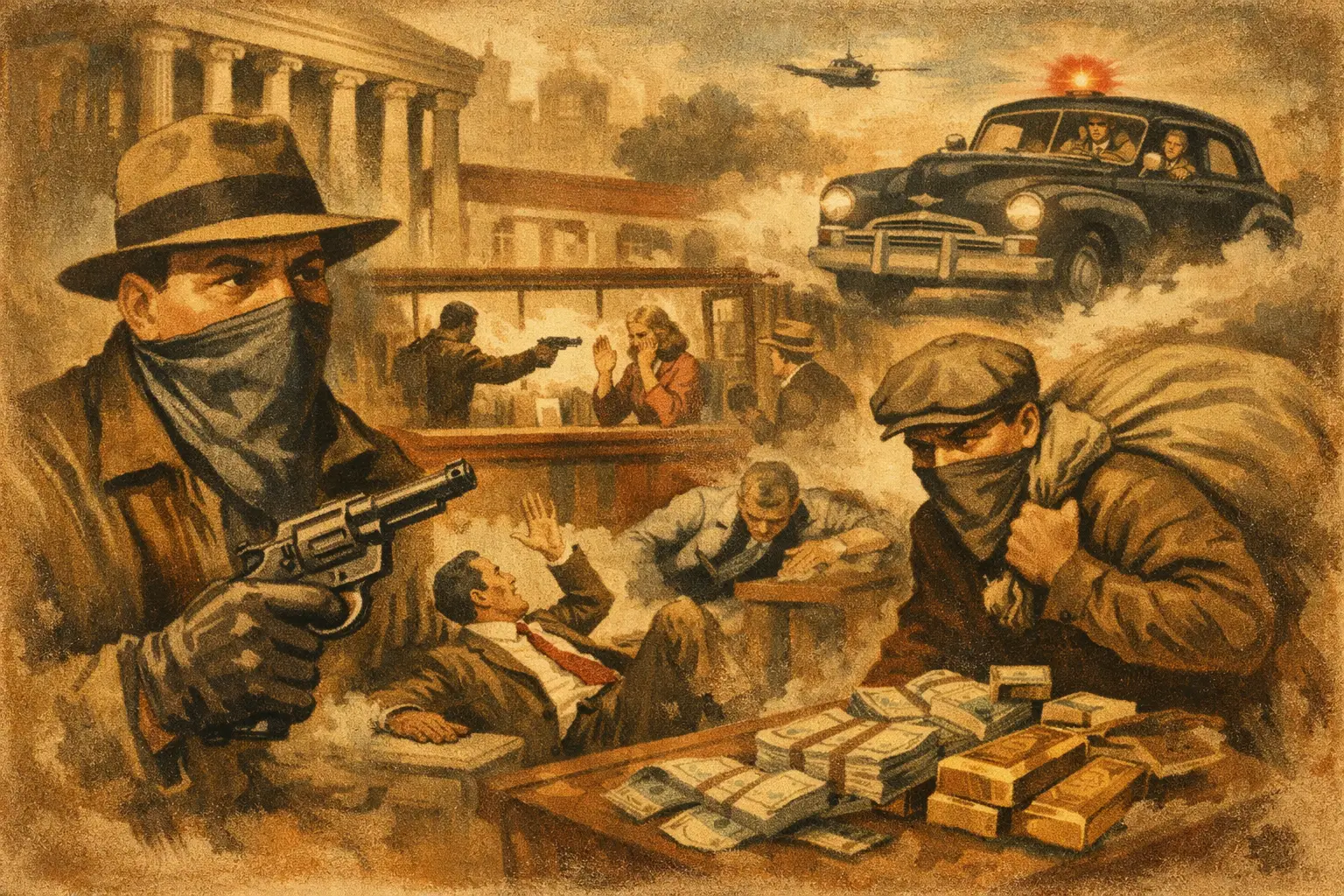
A bank robbery is never just a bank robbery. It is a pressure cooker with a vault door, a lousy getaway car, somebody who talks too much, and a clock ticking loud enough to make a saint sweat. The best bank robbery fiction books understand that the money is usually the least interesting thing in the room. What matters is who needs it, who panics first, and who was dumb enough to believe the plan would stay clean.
This kind of crime novel lives or dies on momentum. You want the stink of burnt coffee in a stakeout car, the click of a pistol being checked for the third time, and a crew whose private resentments are more dangerous than the cops. Here are 12 books that know a heist is not a puzzle to admire. It is a bad decision with a body count.
12 Bank Robbery Fiction Books With Real Getaway Heat
1. The Hot Rock by Donald E. Westlake
Westlake’s John Dortmunder is a professional thief trapped in a world built by sadists, bureaucrats, and people who cannot leave a simple job alone. The score in The Hot Rock is technically a jewel theft, not a bank job, but it belongs on the shelf of anyone who loves criminal logistics collapsing into farce.
The book’s lesson is cruel and useful: a complicated plan is not impressive. It is just a longer walk to disaster. Westlake makes failure funny without making the criminals cute, which is harder than it looks.
2. The Score by Richard Stark
Richard Stark’s Parker books are stripped down to muscle, nerve, and cold professional appetite. In The Score, Parker and a crew hit an entire small town, working through banks, businesses, and every locked box that can be turned into cash.
This is robbery as military operation, except the soldiers are thieves and no one gets a medal for making it home. Stark’s prose does not waste time comforting anybody. The plan is practical, the violence is blunt, and the aftermath proves that a perfect job is mostly something criminals tell themselves before dawn.
3. The Friends of Eddie Coyle by George V. Higgins
Nobody writes criminal conversation quite like Higgins. His Boston crooks, cops, informants, and gun runners speak in long, wary loops, each sentence designed to find out what the other guy knows without giving away anything useful.
Bank robberies sit close to the center of The Friends of Eddie Coyle, but this is not a glamorous caper. It is a story about the wear and tear of being a small-time operator when everybody above you has leverage. Eddie is not a mastermind. He is a man trying to keep breathing while every deal gets tighter. That is where the book finds its ache.
4. Dog Day Afternoon by Patrick Mann
Originally published as The Boys in the Bank, Patrick Mann’s account of the Brooklyn hold-up that inspired the movie has the sweaty, bizarre energy of reality refusing to behave like fiction. A robbery turns into a siege. The public watches. The authorities improvise. The men inside discover there is no clean exit from a spectacle.
Read it for the sheer weirdness of the situation and for the reminder that a bank job can become a national circus before the getaway driver has even started the engine.
5. The Getaway by Jim Thompson
Jim Thompson did not believe in happy endings, probably because he had met people. The Getaway follows Doc McCoy after a prison deal puts him back on the street and back in business. Then the robbery happens, the money starts changing hands, and the road fills with people who regard betrayal as a service industry.
The novel is meaner and stranger than its famous film versions. Thompson understands that escape is not a location. It is an illusion sold to desperate people at a criminal rate of interest.
6. The Killer Inside Me by Jim Thompson
This is not a bank-robbery novel in the conventional sense, but it is essential reading for anyone who likes crime fiction where the real heist is psychological. Lou Ford is a small-town deputy with a polite smile, a rotten core, and a voice that makes every lie sound neighborly.
Why include it here? Because bank robbery fiction is often sold as a story about masks. Thompson goes one better and asks what happens when the mask is the face people trust. It is ugly business. That is the point.
7. The Robber Bridegroom by Eudora Welty
This one comes at crime from a crooked angle. Welty’s Southern gothic fairy tale follows bandits, tricksters, and dangerous romance in a landscape where folklore has a knife in its boot. It is not a procedural robbery novel, and it does not pretend to be.
But readers who enjoy regional voices, outlaw behavior, and menace with a grin will find plenty to chew on. Crime gets more interesting when the land itself seems to be in on the joke.
8. The Lock Artist by Steve Hamilton
Mike is a gifted safecracker who cannot speak, a limitation that becomes both a survival skill and a prison sentence. The Lock Artist has the engine of a crime novel but the bruised inner life of a coming-of-age story.
Hamilton gives the technical side of breaking into things enough weight to feel convincing, then puts the emphasis where it belongs: on what crime costs a young man who has already learned that adults can be dangerous. It is quieter than a hard-boiled shootout, but the tension stays tight.
9. The Wheelman by Duane Swierczynski
A driver named Lennon has the kind of final job that should make readers immediately start pricing funeral flowers. The robbery goes sideways, the city becomes hostile territory, and the story tears forward with the cheerful recklessness of a car with no brakes.
Swierczynski is good at velocity, bad luck, and people making the worst available choice with real conviction. If you want your crime fiction fast, loud, and a little deranged, this is your ride.
10. The Last Good Kiss by James Crumley
Crumley’s detective C.W. Sughrue is not planning a bank score, but he moves through the same battered American zones where drinking, violence, money trouble, and bad judgment share an apartment. The Last Good Kiss is a private-eye novel with a hangover, a broken nose, and poetry in its bloodstream.
It earns a place here because lovers of bank robbery fiction usually want more than procedure. They want consequences, regional grime, and characters who can tell a joke while stepping over the wreckage.
11. The Sisters Brothers by Patrick deWitt
A Western about hired killers may seem like it wandered in from another county, but stick with it. Eli and Charlie Sisters are professional criminals moving through the Gold Rush with a contract to fulfill and a talent for turning every practical matter into chaos.
DeWitt’s deadpan humor makes the violence land harder. The book understands a permanent truth about outlaw stories: the men who call themselves professionals are often one horse, one drink, or one insult away from ruining everything.
12. Blacktop Wasteland by S. A. Cosby
Beauregard Montage is a family man, mechanic, former getaway driver, and the sort of person crime novels love to test until something breaks. When money problems close in, he gets pulled toward one more score, because apparently “one more score” has wrecked fewer lives than anybody can count.
Cosby brings speed, Southern heat, family pressure, and a hard moral edge to the material. The heist scenes move, but the real power comes from knowing exactly what Beau stands to lose if the job works and what he loses if it does not.
What Makes Bank Robbery Fiction Hit Hard
The strongest books in this corner of crime fiction do not worship the plan. They put the plan under fluorescent lights and let it sweat. A great robbery story needs competence, sure, but competence alone is boring. The spark comes from a crew with mismatched motives: one wants money, one wants revenge, one wants out, and one just wants to be the smartest person in the room.
Setting matters, too. A bank on a lonely road, a city branch near closing time, or a dying factory town with one cash-heavy institution can tell you as much as a character biography. The place determines the heat. In a small town, everybody notices the wrong car. In a city, the crew can disappear, right up until somebody sells them out.
And then there is dialogue. The best crooks do not explain their souls for three pages. They dodge, threaten, flatter, lie, and ask whether anybody wants a sandwich before the shooting starts. That is the music of the genre. Elmore Leonard knew it. Higgins knew it. So do the writers above when they let people talk themselves into trouble.
Pick the book that matches your preferred poison. Want clean, ruthless mechanics? Start with Stark. Want grifters stumbling into comic hell? Westlake is waiting. Want the getaway car to smell like hot rubber and regret? Go with Cosby or Swierczynski. Just do not expect the vault to be the dangerous part. The dangerous part is always the human being holding the key.